


Introduction
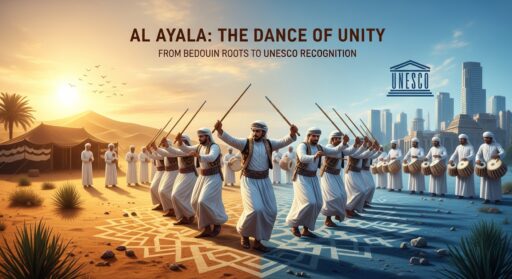
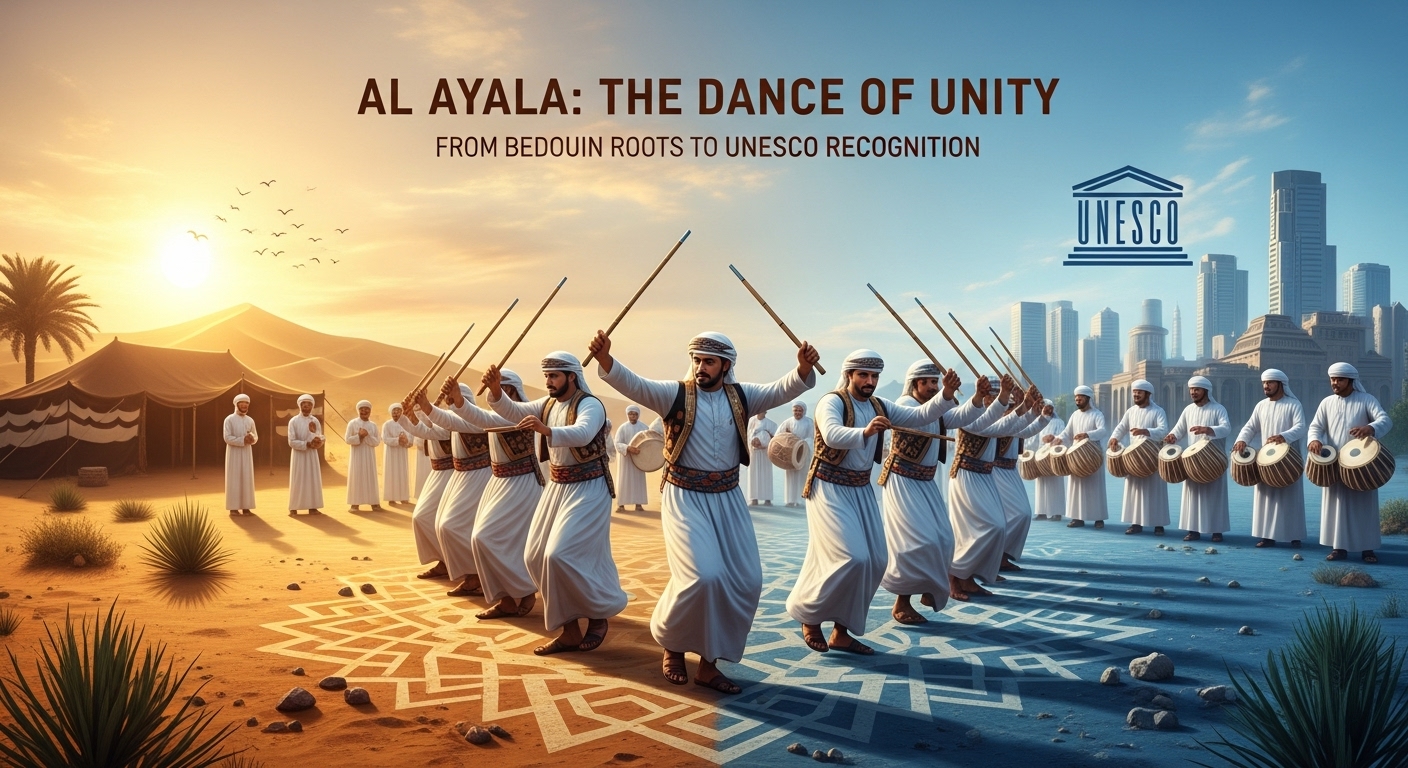
Al Ayala, often referred to as the “stick dance” or “folk dance,” is one of the most iconic and visually striking performing arts traditions in the United Arab Emirates. More than just a dance, it is a living ritual of community, a simulated battle that celebrates unity, courage, and Bedouin heritage. Its journey from a spontaneous desert performance to its inscription on UNESCO’s Representative List of the Intangible Cultural Heritage of Humanity marks its significance as a global cultural treasure.
History
Al Ayala’s origins are deeply rooted in the Bedouin tribes of the Arabian Peninsula. It was traditionally performed to celebrate victories in battle, welcome returning heroes, or mark festive occasions like weddings and Eid. The dance served as a powerful display of tribal solidarity and strength, a non-lethal way to showcase martial skill and communal harmony. Before the union of the UAE, different variations of Al Ayala were performed by tribes across the region, forming a common cultural thread that bound the emirates together long before political federation.
Key Features
The performance is highly symbolic and structured. Two parallel rows of 20 or more men face each other, representing opposing sides. The performers, moving in a gentle, swaying rhythm, carry thin, elegant bamboo sticks, symbolizing swords or spears. Between the rows, musicians play large drums (al-ras), smaller drums (takhamir), and cymbals, setting the powerful, hypnotic rhythm. The dance also includes poets who chant verses (al-nahma) celebrating gallantry, heritage, and the values of the tribe. The overall effect is not one of aggression, but of dignified, synchronized unity.
Cultural Significance
Al Ayala is a profound expression of the Emirati social fabric. It embodies key cultural values such as cooperation, collective identity, and chivalry (al-furusiyah). The dance requires perfect synchronization, teaching participants the importance of working as one. It is a powerful vehicle for transmitting poetic and musical traditions to the youth. Most importantly, it has historically functioned as a tool for conflict resolution and reconciliation between tribes, where performing together signaled the end of hostilities and a return to peace.
Modern Relevance
Today, Al Ayala is a cornerstone of national celebrations, most prominently during UAE National Day. It is performed in schools, universities, and public squares, instilling a sense of national pride in the youth. Its recognition by UNESCO in 2014 was a moment of immense national pride, validating the UAE’s efforts to safeguard its intangible heritage. Troupes now represent the UAE at international cultural festivals, making Al Ayala a global ambassador of Emirati culture. While the context has changed from the desert to the stage, its core message of unity and strength remains as relevant as ever.
Conclusion
Al Ayala is the heartbeat of Emirati folklore made visible. It is a dynamic, living tradition that has gracefully transitioned from a tribal custom to a symbol of national identity. Its recognition by UNESCO ensures that this ancient art form will be protected and celebrated worldwide. As the sticks click in unison and the drums echo, Al Ayala continues to tell an ancient story of a people united, a story that continues to define the spirit of the UAE.