

Introduction
The rich tapestry of Emirati folklore is woven with threads of mystery and imagination, populated by a fascinating array of supernatural beings that once served to explain the unknown and enforce social norms. From the shape-shifting Ghoul of the desert to the mysterious Jinn and the terrifying sea monster Nahhan, these creatures were very real in the minds of ancestors, representing both the dangers of the natural world and the moral boundaries of the community.
History
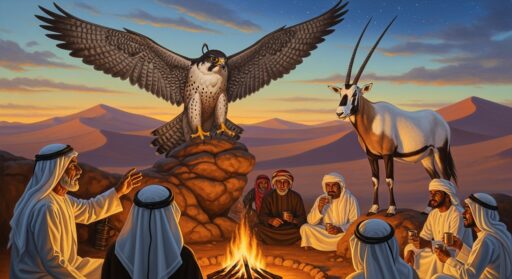
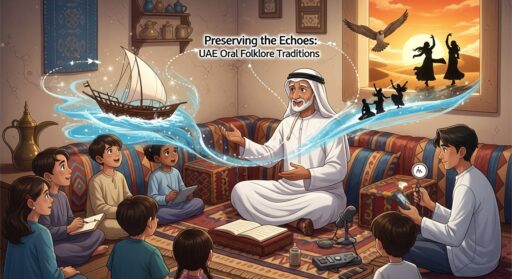
These mythological beings emerged from the oral storytelling traditions of Bedouin and maritime communities. In an era before scientific explanation, they helped people make sense of unexplained phenomena—a sudden illness, a lost traveler in the desert, or a disappearing fishing boat. Stories of these creatures were passed down through generations around campfires and in family majlis, serving as both entertainment and cautionary tales. They reflected the specific fears and challenges of life in the pre-oil UAE, where the desert and sea were both providers and potential graves.
Key Features
The most prominent creatures include:
- Al Ghoul: A treacherous, shape-shifting desert demon that was said to appear as a beautiful woman or an animal to lure travelers to their doom. It could also consume human flesh, making it a potent warning against wandering alone at night.
- Jinn: In Islamic belief, beings created from “smokeless fire.” In local folklore, they are complex entities that can be good, evil, or neutral, inhabiting abandoned places, deserts, and sometimes interfering in human affairs.
- Umm Al Duwais: A specific type of malevolent female Jinn or Ghoul, known for her stunning beauty and her habit of seducing men before revealing her true, monstrous form and attacking them.
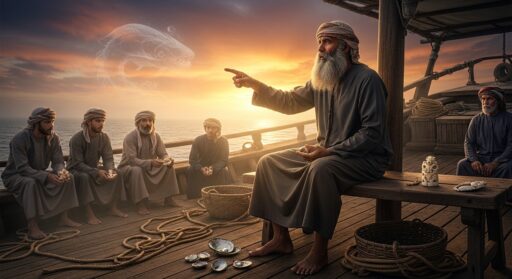
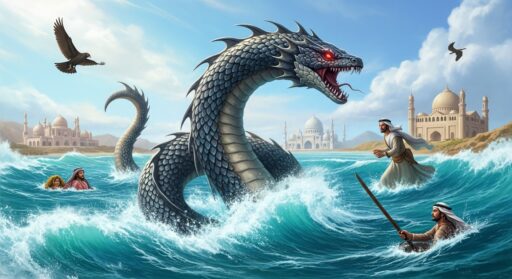
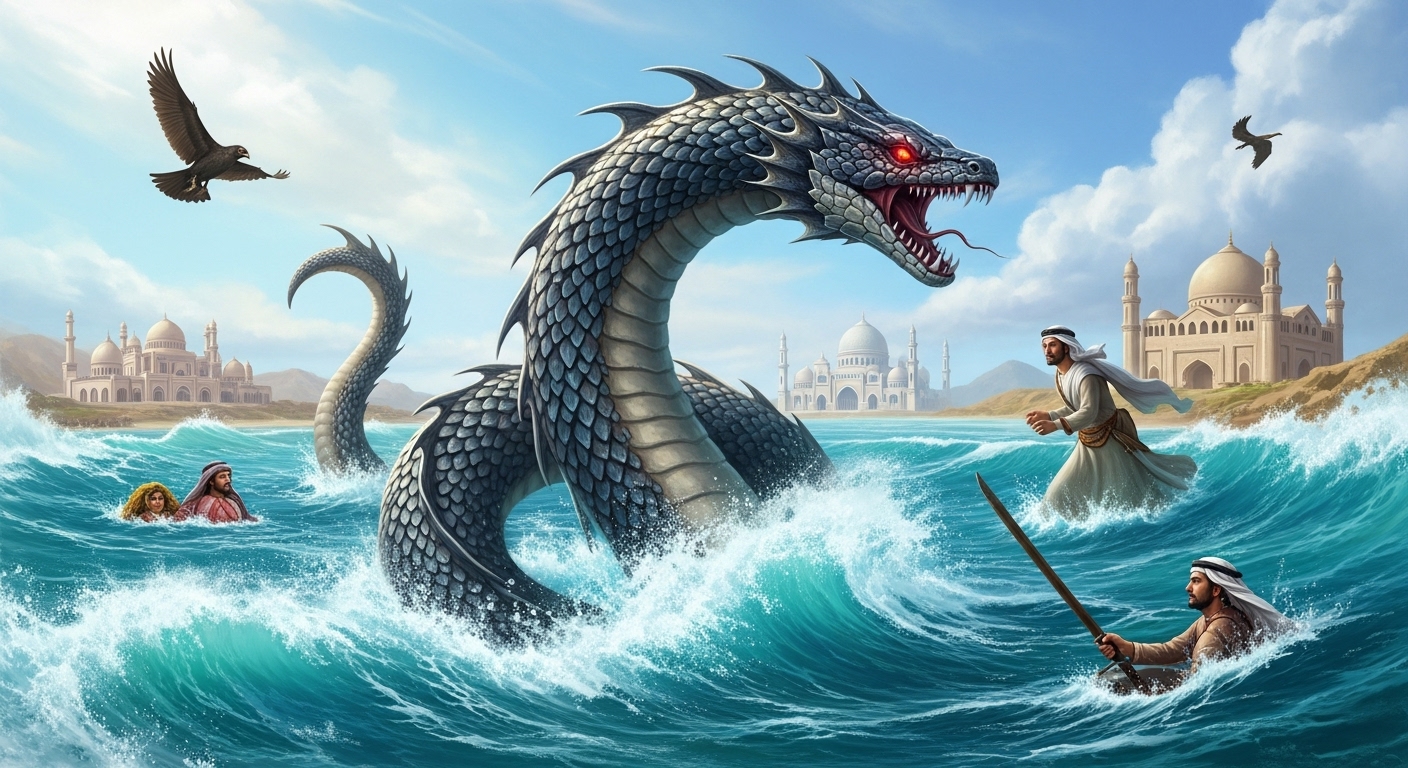
- Nahhan: A colossal sea monster feared by pearl divers and fishermen, believed to capsize boats and drag sailors to the depths, embodying the unpredictable and deadly power of the ocean.
Cultural Significance
These stories served multiple crucial cultural functions. They were effectively the first “safety guidelines,” discouraging people from risky behavior like traveling alone in the dark or swimming in dangerous waters. They also reinforced moral codes; tales of Umm Al Duwais, for instance, served as warnings against temptation and illicit relationships. On a deeper level, these myths helped communities process collective fears and the real dangers of their environment, giving a name and form to the existential threats of the desert and sea.
Modern Relevance
While belief in these literal creatures has faded with modernization and education, their legacy endures powerfully. They remain vibrant characters in children’s books, animated films, and theatrical productions, ensuring the survival of the stories themselves. The term “Ghoul” is still used colloquially to describe someone who is deceptive or untrustworthy. Furthermore, these figures have become symbols of national heritage, featured in museum exhibitions and cultural festivals, reminding Emiratis of the rich, imaginative world of their ancestors.
Conclusion
The ghouls, jinn, and monsters of Emirati folklore are far more than relics of superstition. They are the narrative embodiment of a people’s relationship with a challenging environment and their understanding of the human condition. They taught lessons, provided explanation, and fostered a sense of shared identity through collective story. By preserving these tales, the UAE honors not just the stories themselves, but the creative spirit and cultural wisdom of the generations who told them.