


Introduction
The life of a Emirati pearl diver, or “ghassal,” was one of extreme hardship, danger, and uncertainty. Venturing into the deep for months at a time, these men lived at the mercy of the sea. In this world of constant peril, a rich tapestry of myths, omens, and superstitions flourished aboard the dhow, not as mere fantasy, but as a vital psychological and social system that provided a framework for coping with the unknown and appealing for divine protection.
History
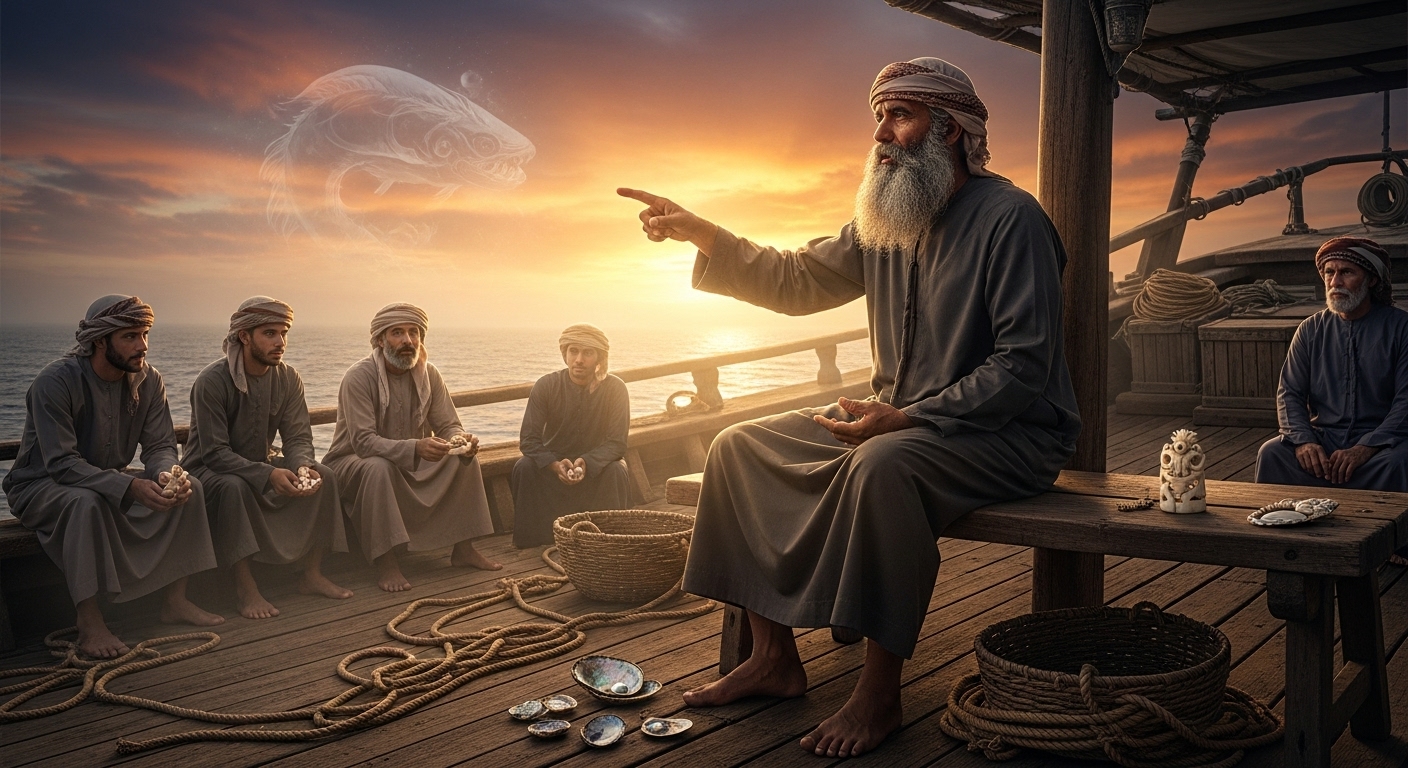
During the peak of the pearling industry (from the 1770s to the 1930s), divers faced unimaginable risks: decompression sickness, shark attacks, storms, and blindness. In the absence of scientific knowledge or reliable weather forecasts, they turned to spiritual and superstitious beliefs to exert a sense of control over their fate. These beliefs were passed down from the “Nakhoda” (captain) to the novice divers and became an integral part of the pearling culture, governing daily routines and decision-making on the long voyages.
Key Features
The pearling folklore was a complex code of conduct and belief:
- Good Omens: Spotting certain birds or dolphins at the start of a journey was considered a sign of a good season. Dreams of finding large pearls were also seen as auspicious.
- Bad Omens and Taboos: Whistling on the dhow was believed to summon wind storms. Certain words were forbidden; for instance, saying “drown” was taboo. Seeing a woman, or even hearing a mention of one, before diving was considered bad luck, as it was believed to distract the diver and invite danger.
- Protective Rituals and Figures: The “Nazzal” was a man on board believed to have the power to see underwater and ward off evil jinn. Divers often carried small pouches with verses from the Quran for protection. Ceremonies were held before departure and upon return to bless the voyage and give thanks.
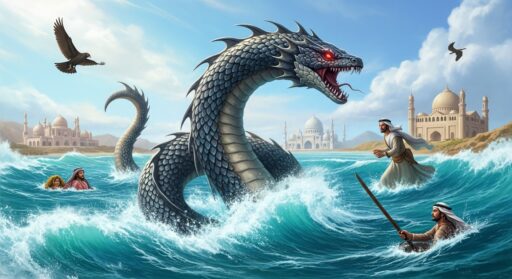
- Mythical Creatures: The “Nahhan,” a gigantic sea monster, was feared, as were malevolent jinn believed to inhabit certain parts of the sea.
Cultural Significance
This system of beliefs served critical psychological and social functions. It reduced anxiety by providing explanations for misfortune and a sense of agency through ritual. The shared superstitions and taboos created a strong bond among the crew, fostering a sense of unity and mutual responsibility that was essential for survival. The folklore also reinforced the social hierarchy on the dhow, with the Nakhoda and the Nazzal acting as both practical and spiritual leaders.
Modern Relevance
While the pearling industry has vanished, its folklore remains a poignant and respected part of the national memory. These stories are central to the narrative at museums like the Sharjah Maritime Museum and the Pearl Journey exhibit in Ras Al Khaimah. They are dramatized in heritage plays and documentaries, ensuring that the courage and sacrifices of the ghassals are not forgotten. The superstitions, while no longer believed, are recounted with a sense of nostalgia and pride, representing the resilience and faith of the ancestors who built the foundation of the nation.
Conclusion
The legends of the pearl divers are far more than quaint superstitions; they are the spiritual logbook of a bygone era. They offer a profound insight into the minds of men who braved the depths, armed with little more than their breath, their faith, and their stories. By preserving these myths, the UAE honors not just the economic history of pearling, but the immense human spirit, fear, and hope that propelled it—a timeless testament to the relationship between man and the mighty sea.