

Introduction
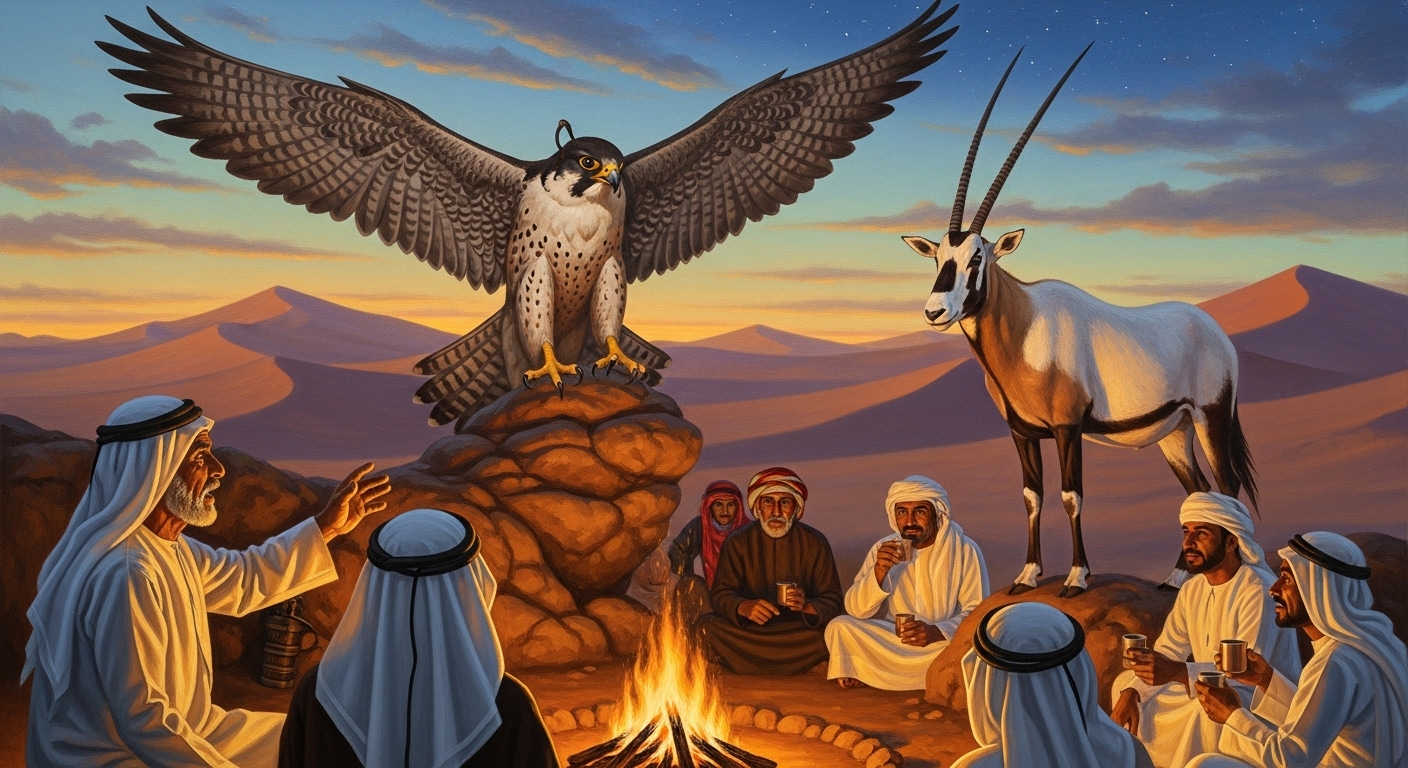
In the vast, unforgiving landscape of the desert, the relationship between the Bedouin and the animal kingdom was one of profound interdependence and respect. This sacred bond is immortalized in the rich tradition of Bedouin storytelling, where animals are not merely characters but powerful symbols embodying the very values, struggles, and aspirations of human life. The noble falcon and the resilient oryx stand as the most iconic of these, their stories forming a core part of the UAE’s cultural mythology.
History
For centuries, Bedouin life was inextricably linked to the animals of the Arabian Peninsula. Survival depended on the camel for transport and milk, the saluki for hunting, and the falcon for procuring food. This daily intimacy fostered a deep observation of animal behavior, which was then translated into metaphorical lessons through oral narratives. Stories were used to teach the young about courage, patience, endurance, and the delicate balance of nature. The animal fable was the primary vehicle for transmitting the Bedouin ethos from one generation to the next.
Key Features
Specific animals carried specific symbolic weight:
- The Falcon: Represented nobility, speed, focus, and freedom. Stories often highlighted its loyalty to its handler (the “muqaddim”) and its unparalleled hunting skills, making it a symbol of both status and survival.
- The Arabian Oryx: Embodied purity, beauty, and, most importantly, resilience. Its ability to survive in the harshest desert conditions and its stark white coat, which reflected the sun, made it a living symbol of hope and endurance against all odds.
- The Camel: The “ship of the desert” was a symbol of patience, perseverance, and life itself. Stories celebrated its strength, its importance to travel and trade, and its gentle nature.
- The Saluki Dog: Symbolized loyalty, swiftness, and keen senses. Tales of salukis faithfully assisting their owners on hunts reinforced the value of trust and partnership.
Cultural Significance
These animal stories were a fundamental part of moral and cultural education. By attributing human-like qualities and dilemmas to animals, elders could impart complex life lessons in an accessible and memorable way. A story about a falcon’s patience before a hunt taught the value of timing and strategy. A tale of an oryx escaping a predator illustrated the power of resilience. This narrative tradition reinforced the Bedouin worldview, which saw humanity not as separate from nature, but as an integral part of a complex ecological and spiritual web.
Modern Relevance
The symbolic power of these animals has transcended folklore to become part of the UAE’s modern national identity. The falcon is prominently featured on the nation’s emblem, and falconry remains a cherished heritage sport. The story of the Arabian Oryx is a real-world conservation legend; after being hunted to near extinction, it was successfully reintroduced into the wild, making it a potent modern symbol of the UAE’s commitment to preserving its natural heritage. These animals are celebrated in art, literature, and on currency, ensuring their symbolic stories continue to inspire a new generation.
Conclusion
The animal symbols of Bedouin storytelling are a timeless and profound cultural treasure. They reveal a worldview built on acute observation, deep respect for the natural world, and a sophisticated understanding of human virtues. The falcon, the oryx, the camel, and the saluki are more than just animals; they are enduring archetypes that continue to define the character and values of the Emirati people, connecting a modern nation to the ancient wisdom of the desert.